
AMS Nuclear Logo icon

Project Overview

Client: EDF Energy – Hinkley Point B

Type: Obsolescence

Scope Of Supply: Design, Build, Test, Deliver

Key Deliverables: Replacement IFD Pneumatic Panel

When ageing infrastructure begins to threaten the reliability of a safety-critical process, a carefully engineered solution is essential to safeguard long-term operations.

AMS Nuclear was engaged by EDF Energy Generation Ltd to support the modernisation of a pneumatic control system within the IFD operating cell at Hinkley Point B. The existing pneumatic cabinet was responsible for distributing instrument air to equipment within the cell – a function essential for maintaining reliable operation of the fuel route systems.

As components within the system began to show signs of age-related degradation, EDF sought a solution that would maintain operational continuity while improving maintainability and long-term reliability. Working in close collaboration with the station’s Fuel Route Improvement Team, AMS Nuclear delivered a complete engineering solution: from system investigation and design through to the manufacture and testing of a fully integrated replacement pneumatic panel.

The result was a robust, modernised control system that improved maintainability, strengthened operational resilience and provided full engineering documentation to support the asset throughout its lifecycle.

Addressing Ageing Infrastructure Without Disrupting Operations

Within the IFD operating cell, a complex pneumatic network distributes instrument air used to actuate equipment inside the inner cell.

The system had historically been constructed using nylon (Polypenco) pipework routed through a densely populated pneumatic cabinet in the control room. While this design had supported operations for many years, inspection identified that elements of the pipework were beginning to degrade with age.

Although the system continued to operate effectively, the potential for pipework deterioration to affect long-term reliability prompted EDF to explore a proactive engineering solution. The challenge was compounded by the cabinet’s compact layout and complex pipe routing, which made replacing individual sections of pipework impractical.

Rather than attempting incremental repairs, the project team agreed that replacing the entire pneumatic cabinet as a single engineered assembly would provide the most reliable and maintainable long-term solution.

Engineering a Structured Solution Through a Three-Phase Programme

AMS Nuclear approached the challenge through a staged engineering programme designed to minimise risk and ensure that the final solution was informed by verified site data.

The project was divided into three phases:

  • System investigation and survey
  • Detailed engineering design
  • Manufacture, testing and delivery of the replacement panel

This structured approach allowed the engineering team to fully understand the existing system before designing a replacement that would integrate seamlessly with plant operations.

Phase 1: Building a Verified Engineering Baseline

The project began with a detailed survey of the existing electrical and pneumatic cabinet located within the IFD control room.

AMS Nuclear engineers carried out a comprehensive investigation of the installed equipment, pipework routes and control interfaces. From this information, the team developed an accurate Process and Instrumentation Diagram (P&ID) representing the existing pneumatic configuration.

This step was critical. By establishing a clear technical baseline, AMS Nuclear ensured that the subsequent design phase could be based on verified site information rather than assumptions.

The resulting documentation formed the foundation for the next phase of the project.

“Before designing a replacement system, we needed a precise understanding of how the existing cabinet functioned. That survey work allowed us to design with confidence.”

Design Engineer, AMS Nuclear

Phase 2: Designing a Modern Pneumatic Control Panel

With the system configuration fully mapped, AMS Nuclear developed a detailed design for the replacement pneumatic panel.

The engineering package included:

  • Mechanical layout drawings
  • Electrical schematic diagrams
  • Process and Instrumentation Diagrams (P&ID)
  • Instrument, valve and component schedules
  • Assembly documentation and recommended spares lists

The design centred on a wall-mounted enclosure approximately 1700 mm high, 825 mm wide and 200 mm deep, providing sufficient space to house the pneumatic control equipment while maintaining compatibility with the existing installation.

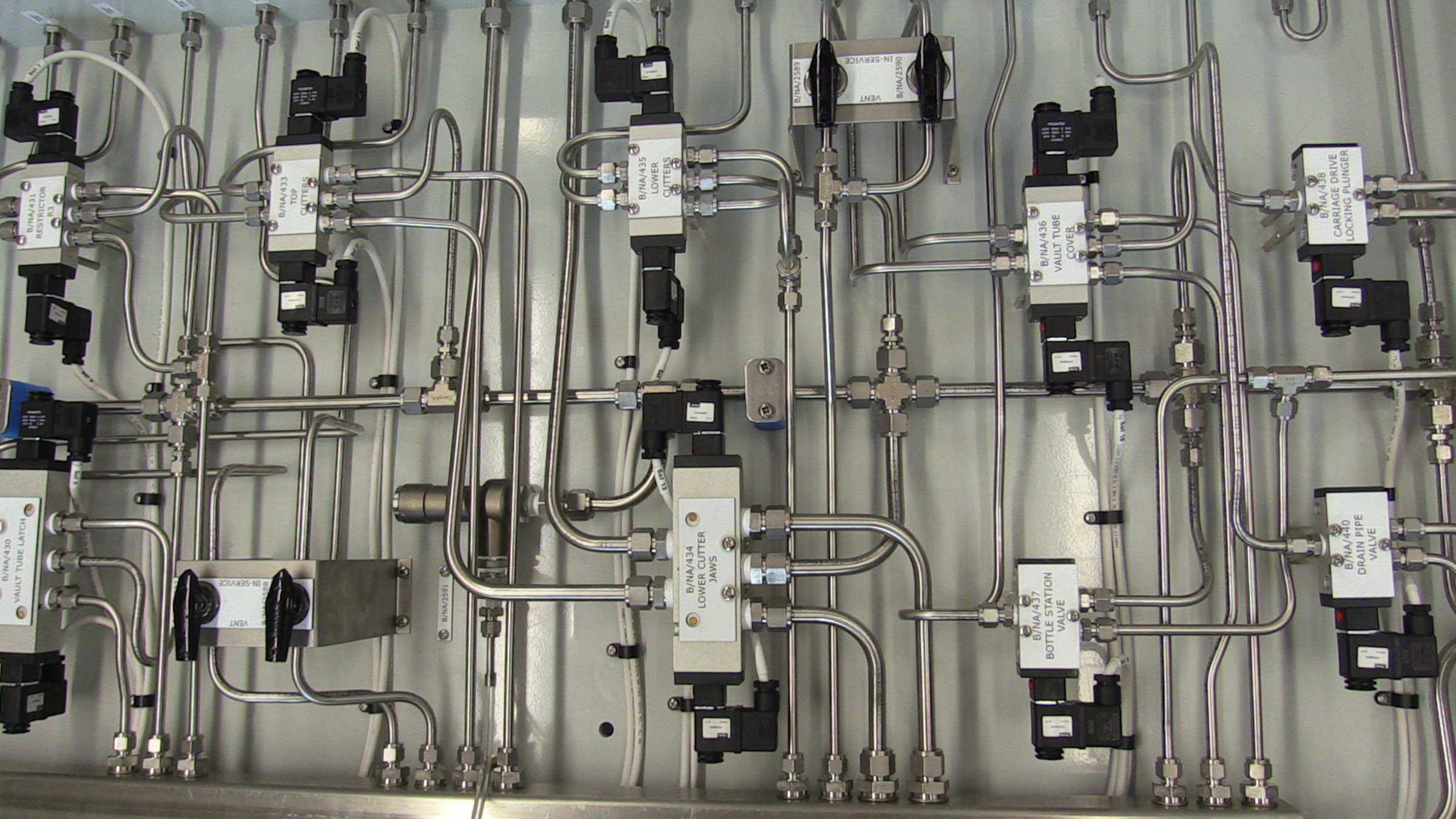
The panel incorporated a carefully engineered arrangement of valves, regulators, filtration systems and control interfaces designed to distribute instrument air reliably across the IFD equipment network.

Key components included:

  • Instrument air isolation and pressure regulation
  • Directional control solenoid valves for actuator control
  • Pneumatic filtration and lubrication systems
  • Vent manifolds and contaminated vent filtration
  • Terminal arrangements for electrical connections

Throughout the design phase, AMS Nuclear engineers refined the panel layout to ensure that the final system would provide improved accessibility, maintainability and long-term operational robustness.

Phase 3: Precision Manufacture and Verified Performance

Following design approval, AMS Nuclear manufactured the replacement pneumatic cabinet at its Bridgwater engineering facility.

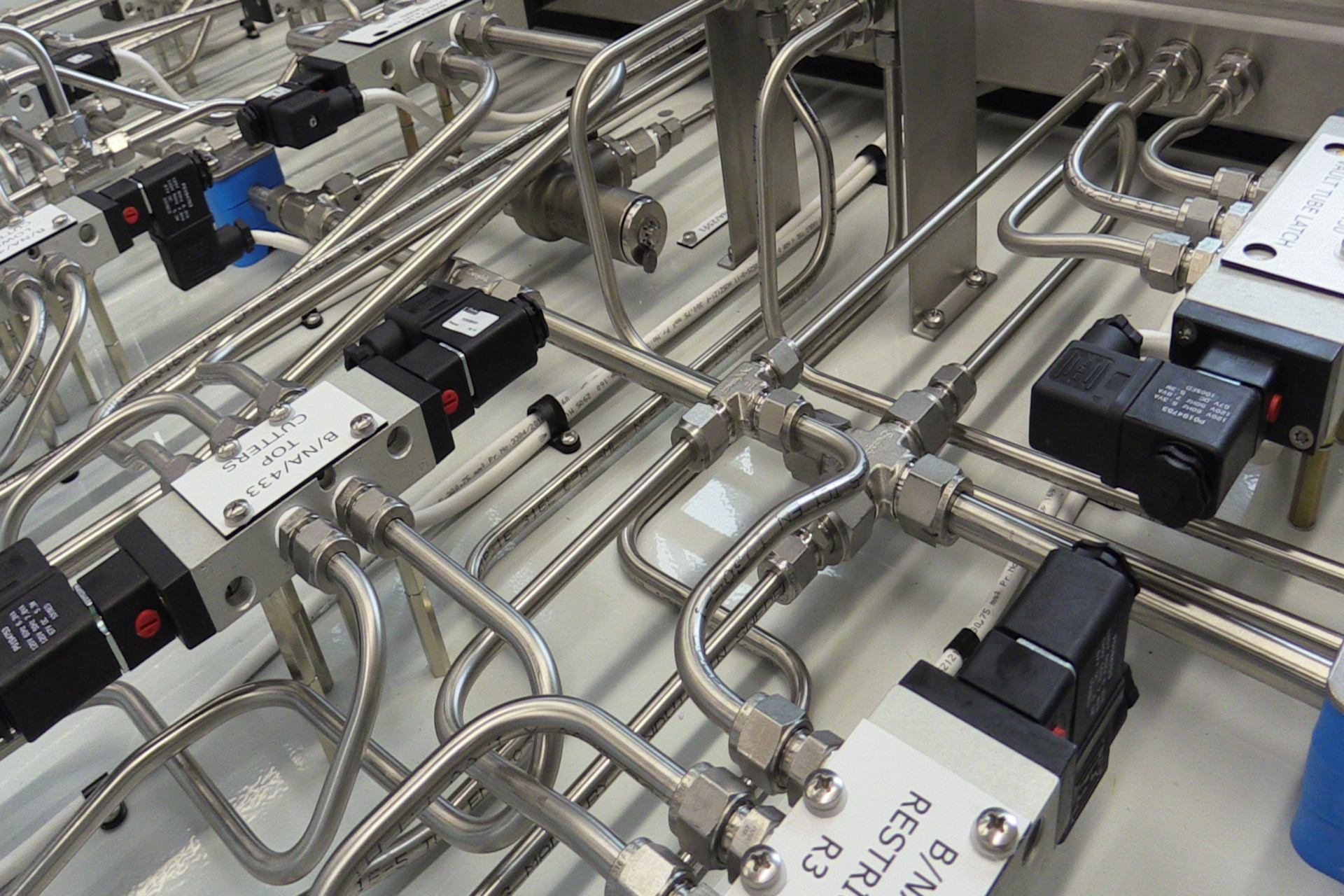
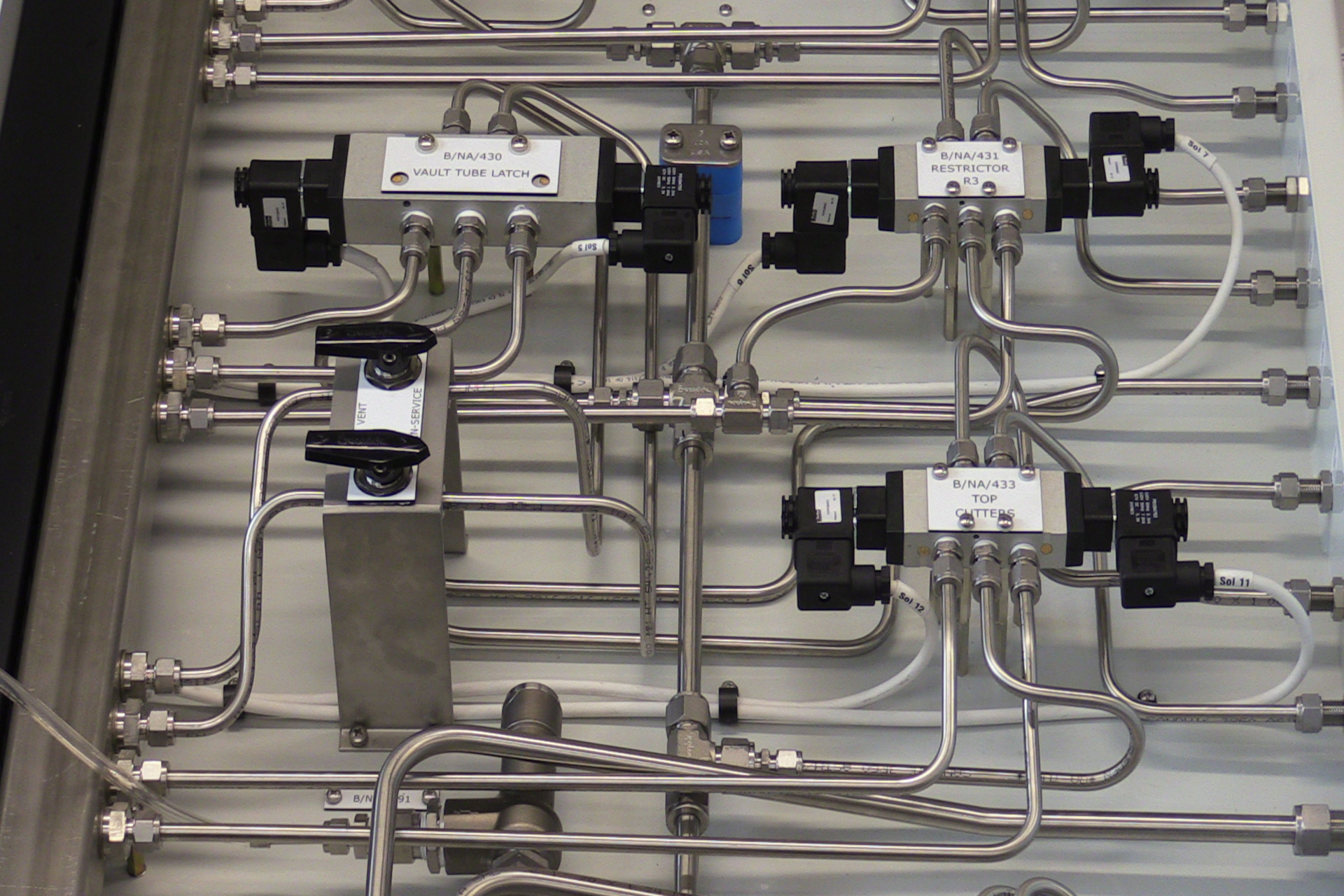
The finished assembly consisted of a powder-coated mild steel enclosure housing the full pneumatic distribution system. Stainless steel isolation valves, Swagelok tubing and fittings and clearly labelled components were incorporated to provide a durable and maintainable installation.

The completed panel included:

  • Instrument air filtration and regulation
  • Safety relief protection
  • Directional control solenoid valves
  • Vent manifolds and contaminated vent filtration
  • Structured terminal arrangements for electrical interfaces

Before delivery, the panel underwent Factory Acceptance Testing (FAT) to verify system performance and confirm functionality against the design specification.

Comprehensive documentation was produced alongside the manufactured panel, including:

  • Manufacturing Quality Plan
  • Factory Acceptance Test documentation
  • As-built drawings and assembly schedules
  • A technical file demonstrating compliance with relevant directives

This ensured that the new system was fully verified and supported by complete lifecycle documentation.

Delivering a Robust Solution for Long-Term Operation

By combining site investigation, detailed engineering design and precision manufacturing, AMS Nuclear delivered a modern pneumatic control panel designed to support reliable long-term operation of the IFD system.

The replacement assembly provides a structured and maintainable solution that reduces reliance on ageing components while maintaining compatibility with existing plant infrastructure.

Equally important, the project delivered a fully documented engineering package, enabling the station’s teams to manage, maintain and support the system confidently throughout its operational life.

AMS Nuclear Certifications

ISO 9001:2015
ISO 14001:2015
ISO 45001:2018
Cyber Essentials