AMS Nuclear Logo icon

Project Overview

Type: Sampling

Scope Of Supply: Inspection, Design, Delivery

Market Sector: Generating

AMS Nuclear partnered with EDF Energy to modernise the Sulphur-35 (S-35) and particulate gaseous discharge monitoring systems at Hinkley Point B, delivering a solution that strengthened regulatory compliance, improved system reliability and reduced long-term maintenance costs.

By replacing ageing instrumentation, restoring full alarm visibility to the central control room, and introducing on-site calibration capability, AMS Nuclear enabled a step-change in operational efficiency and asset sustainability. The upgrade removed reliance on temporary monitoring arrangements, enhanced operator awareness and provided a maintainable, future-ready EC&I solution aligned with nuclear quality standards. 

Supporting Safe, Continuous Monitoring in a Regulated Nuclear Environment

Hinkley Point B operates within a tightly regulated framework where continuous and accurate monitoring of gaseous discharges is essential to safe and compliant plant operation.

The station’s existing monitoring panels formed a critical part of this assurance, providing measurement of particulate and S-35 emissions. As part of ongoing lifecycle management, EDF Energy sought to enhance the performance, maintainability and resilience of these systems, ensuring they remained aligned with modern operational and regulatory expectations.

Overcoming Reliability and Obsolescence Challenges Without Disruption

The existing systems were increasingly affected by instrumentation limitations and ageing control equipment. Periodic faults required the use of mobile back-up units, which, while effective in maintaining monitoring capability, did not provide alarm signals to the central control room. This reduced operational visibility during maintenance or fault conditions.

In addition, key flow measurement instruments could not be calibrated on site. This led to routine replacement at significant cost and introduced inefficiencies into maintenance planning.

The challenge was clear: deliver a robust, modernised solution that improved reliability, restored full alarm functionality and reduced lifecycle cost – without introducing unnecessary disruption to existing plant operations.

Engineering a Maintainable, Future-Ready Monitoring Solution

AMS Nuclear approached the project as a targeted modernisation exercise, combining system redesign with practical improvements in maintainability and operability.

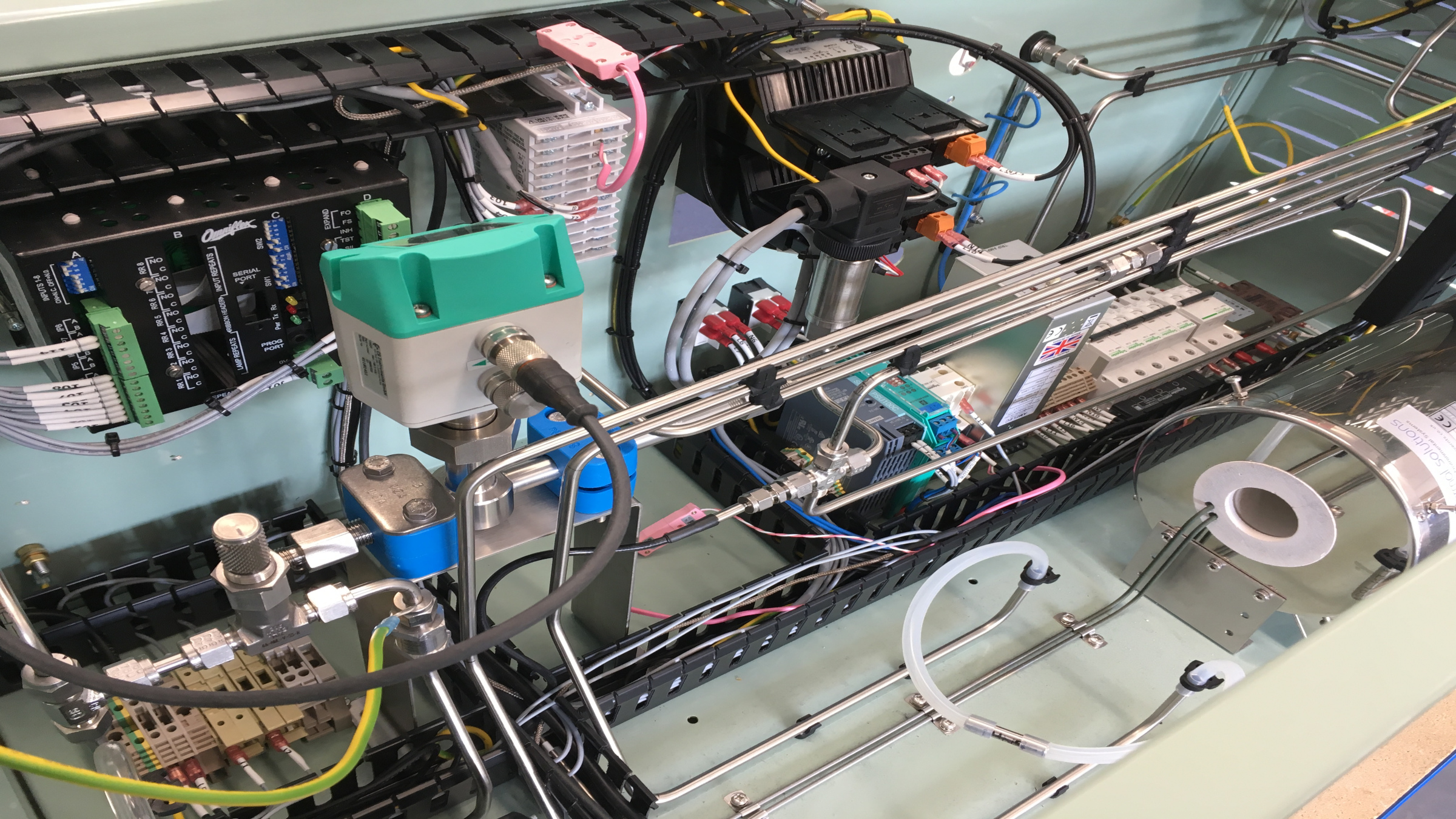
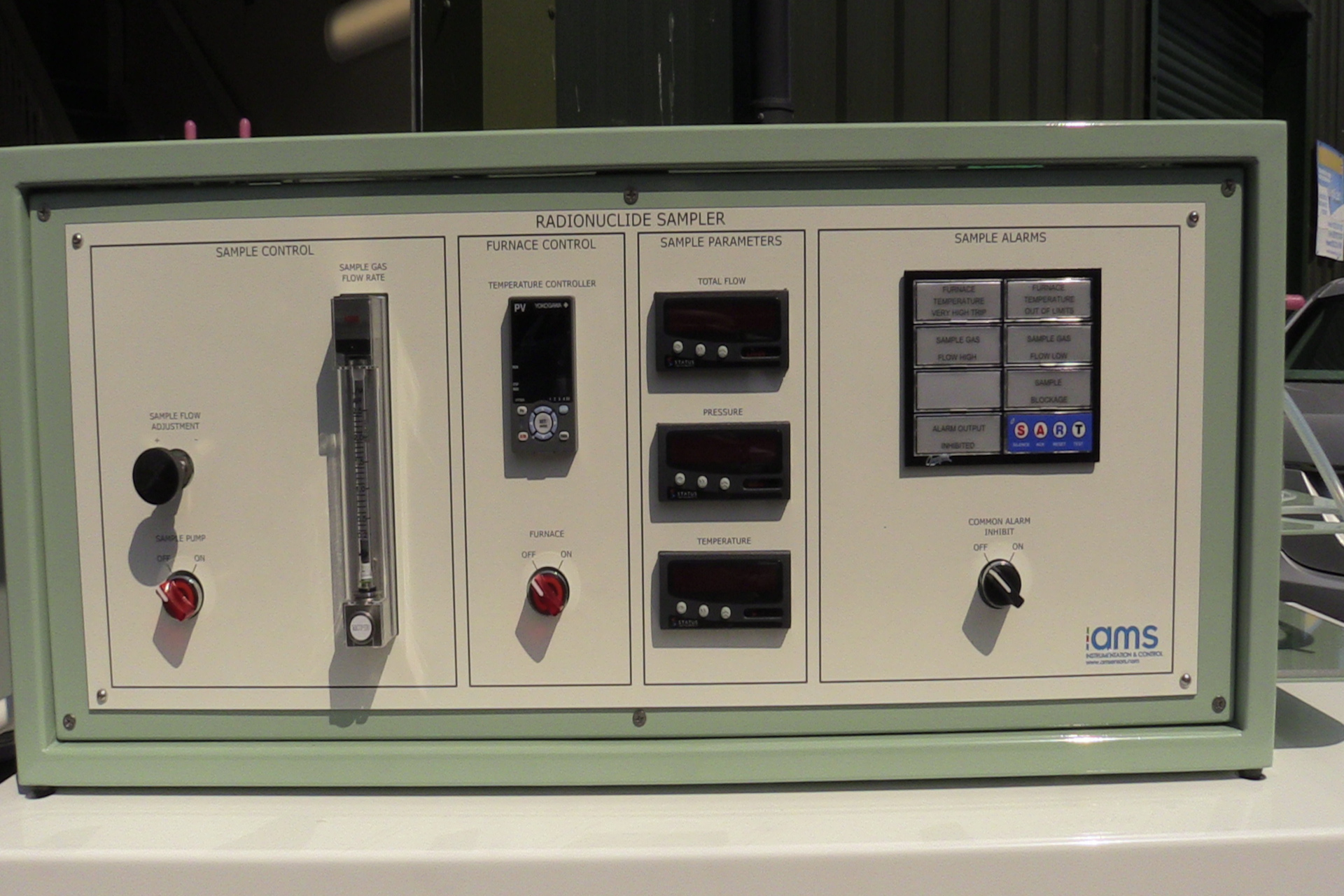
At the centre of the solution was the development and deployment of new Total Oxidation Units (TOUs); self-contained radionuclide sampling systems designed for accuracy, control and ease of use. These units incorporated:

  • Controlled sample flow with integrated pressure and temperature monitoring
  • High-performance furnace systems with fail-safe protection and trip functionality
  • Local alarm annunciation with provision for remote signalling to plant systems
  • Flexible installation options, including static and mobile configurations

Legacy flow measurement technology was replaced with modern thermal mass flowmeters, delivering improved accuracy, totalised flow measurement and compatibility with existing PLC interfaces. This ensured continuity while significantly enhancing performance.

To address obsolescence within the control system, AMS Nuclear removed legacy PLC hardware and implemented new control logic using modern, maintainable components. This included:

  • Automated pump changeover functionality
  • Dedicated alarm annunciators for clear operator feedback 
  • New instrumentation, including pressure transmitters, trip amplifiers, and digital indicators

A key innovation was the introduction of a bespoke thermal mass flowmeter test rig, enabling on-site calibration and verification. This removed the need for routine instrument replacement and provided a sustainable long-term maintenance solution.

“We focused on solving the root cause, not just replacing equipment. By enabling on-site calibration and improving alarm visibility, we’ve made the system easier to maintain and more reliable in operation.”

Senior Engineer, AMS Nuclear

Delivering with Precision Through Modular Design and Controlled Implementation

AMS Nuclear delivered the project through a structured, quality-driven approach aligned with nuclear industry expectations.

Design and Engineering

  • Development of detailed design documentation, including schematics, risk assessments, method statements and test specifications
  • Definition of alarm philosophy and system interfaces in collaboration with stakeholders
  • Delivery in accordance with nuclear QA Grade 3 requirements

Manufacture and Factory Testing

  • Off-site assembly of modular control systems and cubicle backplates
  • Manufacture of upgraded cubicle fascias with integrated annunciation
  • Completion of Factory Acceptance Testing (FAT) and supporting documentation

Installation and Integration

  • Removal of obsolete monitoring equipment and control hardware
  • Installation of new instrumentation, control systems and alarm interfaces
  • Integration with existing plant systems with minimal disruption
  • Deployment of SQEP personnel to ensure safe and compliant delivery

This modular approach allowed significant pre-installation testing, reducing on-site risk and improving overall project efficiency.

Creating a Scalable Approach to Modernising Legacy Systems

This project highlights how targeted, well-engineered upgrades can deliver significant value across ageing nuclear assets without the need for full system replacement.

Key learning points include:

  • Designing for maintainability reduces lifecycle cost and improves operational resilience
  • Modular engineering and off-site testing enhance quality and reduce installation risk
  • Incremental modernisation provides a practical route to address obsolescence in safety-critical systems
  • Clear alarm strategy and operator interfaces improve human factors and operational awareness

These principles are directly transferable across the UK nuclear fleet, where similar challenges around ageing instrumentation and system reliability are common.

This case study reflects AMS Nuclear’s commitment to delivering clear, accountable engineering solutions, combining technical expertise with a deep understanding of client needs to support safe, long-term nuclear operations.

AMS Nuclear Certifications

ISO 9001:2015
ISO 14001:2015
ISO 45001:2018
Cyber Essentials