

AMS Nuclear Logo icon

Project Overview

Client: EDF Energy – Hunterston B, Heysham 1, Dungeness B & Hinkley Point B

Type: Control & Instrumentation

Scope Of Supply: Site Survery, Optioneering, Prototyping, EMC Testing, Onsite Modifications

Key Deliverables: Optioneering reports, On-site Modifications

AMS Nuclear was engaged by EDF Energy to deliver a multi-phase programme of EMI/RFI resilience upgrades at Hinkley Point B, supporting the station’s compliance with updated safety case requirements. Through a structured approach encompassing design, prototyping, type testing and site implementation, AMS Nuclear delivered engineered modifications that enhanced the electromagnetic robustness of critical control and instrumentation systems while maintaining operational continuity.

The programme improved cabinet shielding performance, strengthened bonding integrity and introduced validated installation methodologies backed by formal EMC testing. The result was a compliant, repeatable solution that increased system reliability, extended asset life and provided a proven framework for wider deployment across the AGR fleet.

The Challenge: Strengthening EMI/RFI Resilience

As part of the UK AGR fleet-wide EMI/RFI Safety Case programme, EDF identified a requirement to enhance the resilience of control system enclosures against electromagnetic interference hazards.

The existing infrastructure included legacy cabinet designs with foam-based gaskets and limited direct bonding between doors and enclosures. While functional, these arrangements did not fully align with evolving expectations for electromagnetic shielding performance.

The challenge was to deliver targeted, EMC compliant upgrades across a range of operational systems without introducing unnecessary complexity, downtime, or intrusive modifications. Solutions needed to be practical, repeatable and capable of integration within existing plant configurations.

Designing a Practical, Compliant Solution

AMS Nuclear delivered the programme across three coordinated phases, each building on the previous to ensure technical robustness, validation and efficient deployment.

Phase 1 – Core Cabinet Upgrades

The initial phase focused on priority plant systems including:

  • Boiler Local Instrument Panels
  • Boiler Feed Water Control Cubicles
  • Boiler Half Unit Valve panels
  • Gas Circulator Endurance Fallback panels

AMS Nuclear designed and implemented upgrades centred on three key interventions:

  • Replacement of existing foam gaskets with EMC-rated shielding materials tailored to each enclosure type
  • Installation of additional copper braided earth bonding to ensure reliable, low-resistance electrical continuity
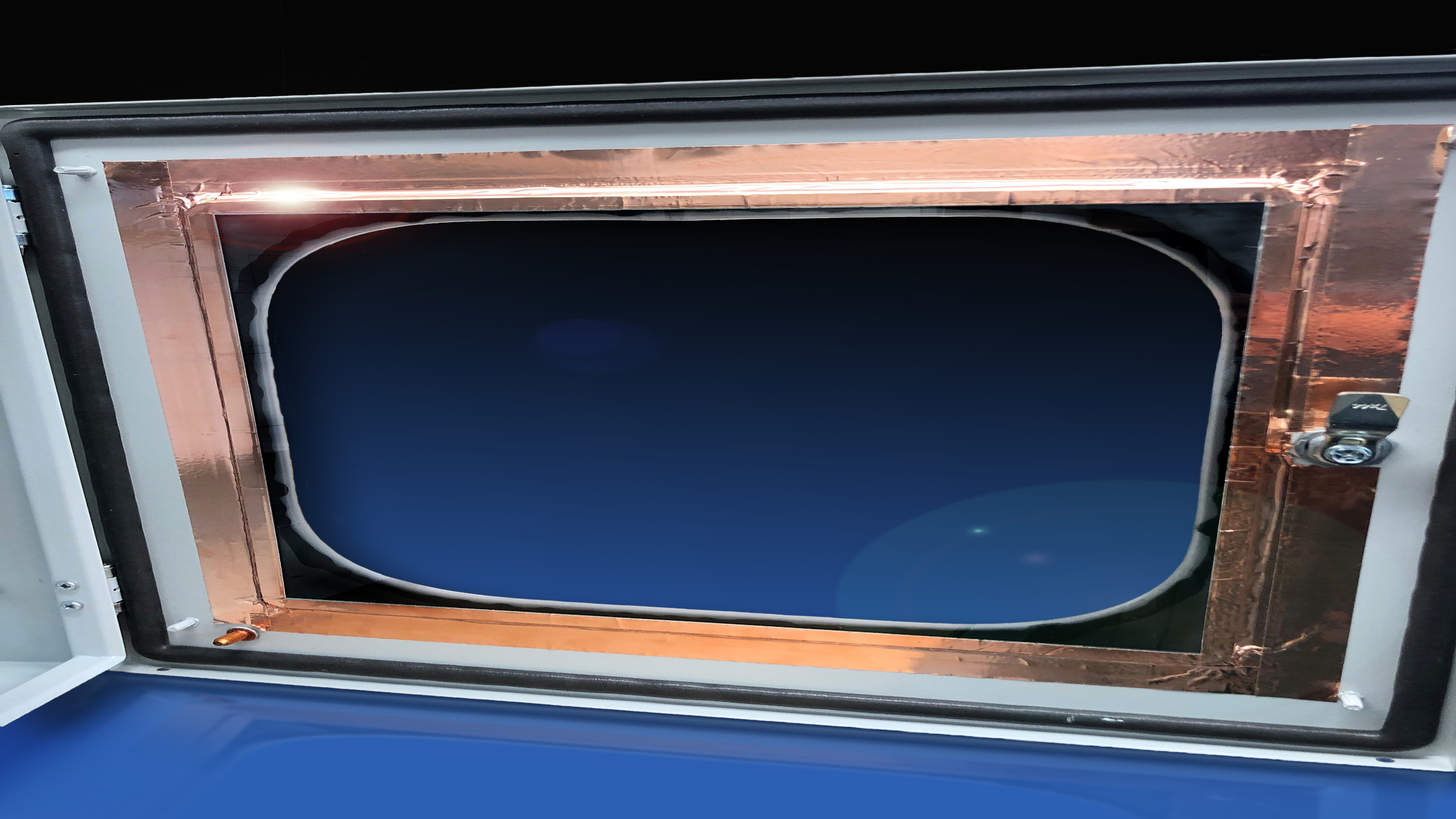
  • Integration of laminated EMI/RFI shielding windows within existing cabinet apertures

All modifications were designed to interface directly with existing structures, avoiding the need for major redesign or replacement of legacy equipment.

Phase 1A – Expanded Scope and Method Refinement

Following initial deployment, AMS Nuclear extended the upgrade strategy to additional safety-critical systems, including:

  • Guardline Cubicles
  • Guardline Boiler Trip Units
  • Quadrant Protection Equipment Panels

This phase introduced enhanced sealing and shielding solutions:

  • Fully wrapped clip-on EMI shielding gaskets for improved durability and consistency
  • Laminated RFI windows bonded using conductive tapes and silicone sealing techniques
  • Supplementary conductive treatments applied to cable access points and interface surfaces

To ensure efficient delivery, AMS Nuclear developed and trialled prototype installations within its workshop environment. This allowed the team to refine installation methods, confirm practical constraints, and optimise execution strategies ahead of site deployment.

Phase 3 – Type Testing and Validation

To support the safety case and provide formal evidence of performance, AMS Nuclear undertook a dedicated EMC type testing programme.

Two shielding approaches were trialled:

  • Laminated RFI screens bonded directly to cabinet doors
  • Retrofitted foil-based mesh shielding applied to existing apertures

Testing was carried out to EN61000-4-3:2006 + A2:2010, aligned with EDF requirements, to assess radiated immunity and attenuation performance.

This phase delivered:

  • Verified performance data for both approaches
  • Confidence in installation methodologies
  • Justification for implementation without additional on-site EMC testing

Controlled Delivery Across the Project Lifecycle

AMS Nuclear adopted a fully integrated delivery model, ensuring consistency and control across all stages of the project.

Design & Engineering

  • Development of detailed designs for gasket replacement, bonding, and aperture shielding
  • Production of Bills of Materials, installation drawings, and technical documentation
  • Preparation of risk assessments and method statements aligned with site requirements

Manufacture & Preparation

  • Procurement of EMC-rated materials and components
  • Batch kitting and pre-assembly of installation packages at AMS Nuclear facilities
  • Prototype manufacture to validate design intent and installation techniques

Quality Assurance

  • Application of Design and Manufacturing Quality Plans
  • Controlled documentation in line with EDF framework expectations
  • Provision of conformity certification for supplied components

Site Delivery

  • Detailed site walkdowns to confirm dimensions, access, and sequencing
  • Installation by qualified technicians using validated methods
  • Coordination with EDF to align works with plant availability and operational constraints

This structured approach ensured that all modifications were delivered safely, efficiently, and in full compliance with nuclear industry standards.

Advancing EMI/RFI Resilience Across the Fleet

This programme established a robust and transferable approach to improving EMI/RFI resilience across legacy nuclear systems.

Key outcomes and lessons included:

  • Prototype-led development reduced delivery risk and enabled optimisation prior to site implementation
  • Type-tested solutions provided formal assurance, removing the need for repeated on-site validation
  • Use of adaptable COTS technologies enabled cost-effective upgrades without full system replacement
  • Design for integration ensured compatibility with existing plant and minimised operational disruption

The solutions and methodologies developed through this project provide a scalable model for future EMI/RFI resilience upgrades across the UK nuclear fleet, supporting long-term safe and reliable operation.

AMS Nuclear Certifications

ISO 9001:2015
ISO 14001:2015
ISO 45001:2018
Cyber Essentials