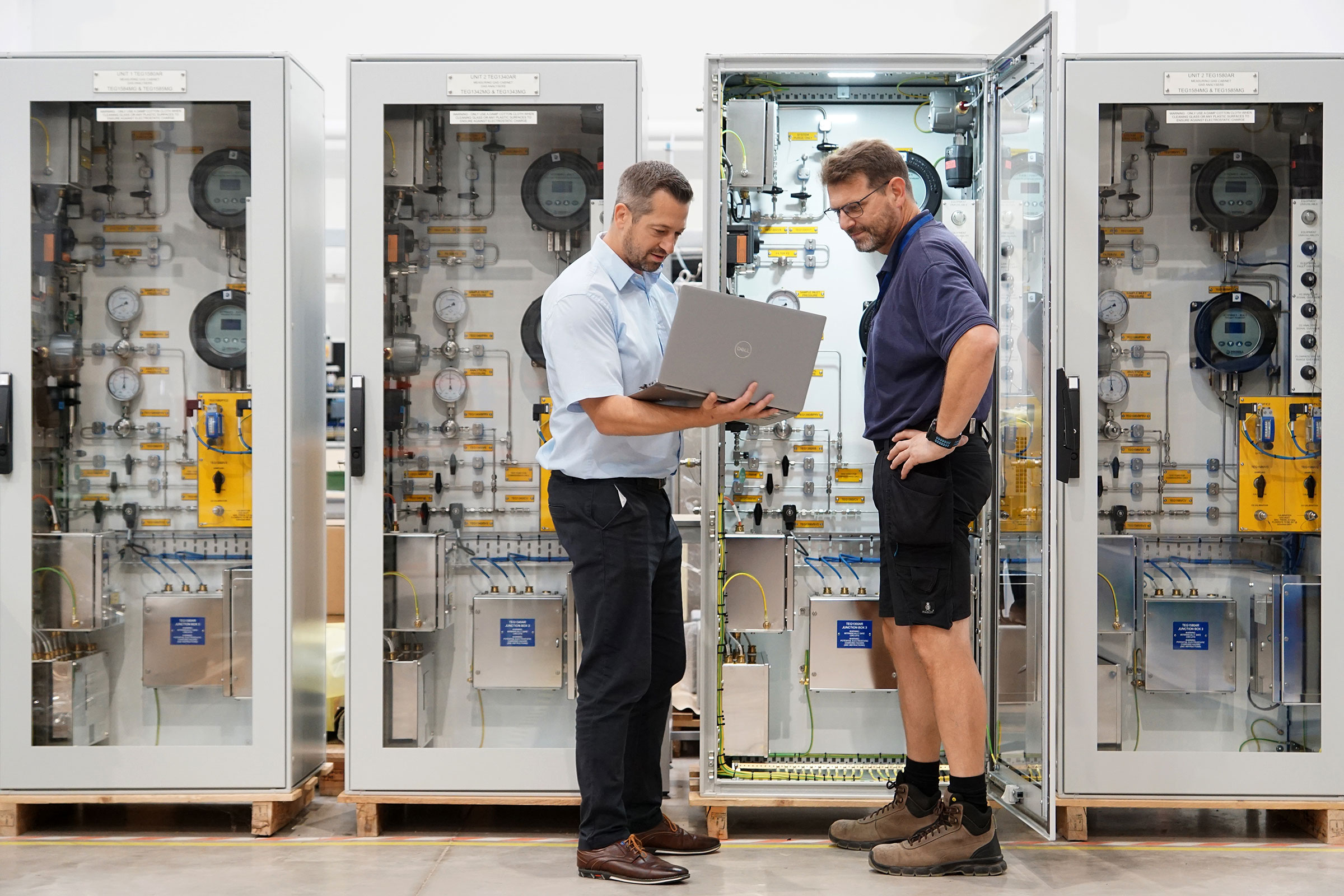
Modernising Gaseous Activity Monitoring (GAM) systems across the nuclear fleet requires more than replacing ageing equipment. The challenge is integrating new technology with existing plant infrastructure while maintaining established monitoring capabilities and minimising disruption to station operations.
AMS Nuclear provides specialist electrical, control and instrumentation (EC&I) engineering expertise to support these upgrades, assessing existing interfaces and developing practical, compliant solutions that reduce installation risk and provide a clear basis for implementation.
At Heysham 1 (EDF Energy), the existing GAM systems were approaching obsolescence as part of a wider fleet replacement programme. Drawing on its proven experience in gaseous monitoring systems, electrical design and small-bore tubing installations at the station, AMS Nuclear completed a detailed site survey and interface feasibility assessment for the new Canberra/Mirion system.
The work covered electrical power supplies, sample gas connections and existing plant interfaces, producing a verified design report and supporting documentation to QA Grade 2 requirements. This established the engineering basis for integrating the new equipment alongside the existing systems during a planned six-month parallel operating period, supporting operational continuity and long-term monitoring reliability.
Modernising Safety-Critical Monitoring in a Live Nuclear Environment
At Heysham 1, the GAM system plays a critical role in monitoring gaseous activity and identifying failed fuel, ensuring reactor conditions remain within defined safety limits.
As part of a fleet-wide modernisation programme, EDF Energy initiated the replacement of legacy GAM systems with a new solution developed by Canberra/Mirion. The new system was to be installed alongside the existing infrastructure, operating in parallel for a defined soak period to validate performance under live conditions.
This created a complex integration scenario – requiring careful coordination between new and existing systems without disrupting ongoing operations or compromising compliance.
Managing Integration Risk Without Disrupting Operations
The key challenge was not simply installing new equipment but ensuring seamless integration with existing plant systems.
The project required:
- Compatibility between legacy electrical supplies, control signals, and the new GAM system
- Modification of existing sample gas interfaces to enable dual system operation
- Assurance that all changes aligned with nuclear safety case requirements and quality standards
At the same time, the solution needed to support uninterrupted station operations, with both systems functioning reliably during the transition period.

“The challenge wasn’t just technical integration, it was making sure everything worked together first time, in a live environment where there’s no margin for uncertainty.”
Project Manager, AMS Nuclear
Defining a Clear, Compliant Path to Integration
AMS Nuclear approached the challenge through a structured, evidence-based engineering methodology focused on early risk reduction and design clarity.
Key activities included:
- A detailed site survey of the existing GAM installation and supporting infrastructure
- Comprehensive review of legacy and new system drawings, including electrical power and control interfaces
- Assessment of EDF’s proposed power supply solution for the new system
- Evaluation of modifications required to the sample gas isolation cubicle to enable parallel operation
- Development of a feasibility and design report defining interface requirements and implementation considerations
The scope covered both electrical integration and process interfaces, including small-bore sample gas pipework and plant signal connections.
All engineering outputs were delivered to QA Grade 2 and verified in accordance with EDF’s Company Technical Standards, ensuring suitability for nuclear safety-related applications.
Delivering a Transferable Model for Fleet-Wide Upgrades
This project demonstrates how early-stage interface engineering can significantly de-risk complex system upgrades in operational nuclear facilities.
By combining detailed site knowledge with structured design assessment, AMS Nuclear established a repeatable approach that can be applied across the wider fleet, particularly where legacy systems must be integrated with modern technologies under live operating conditions.
The outcome is more than a single project success. It is a proven methodology for enabling safe, compliant and efficient modernisation of safety-critical systems across the UK nuclear sector.