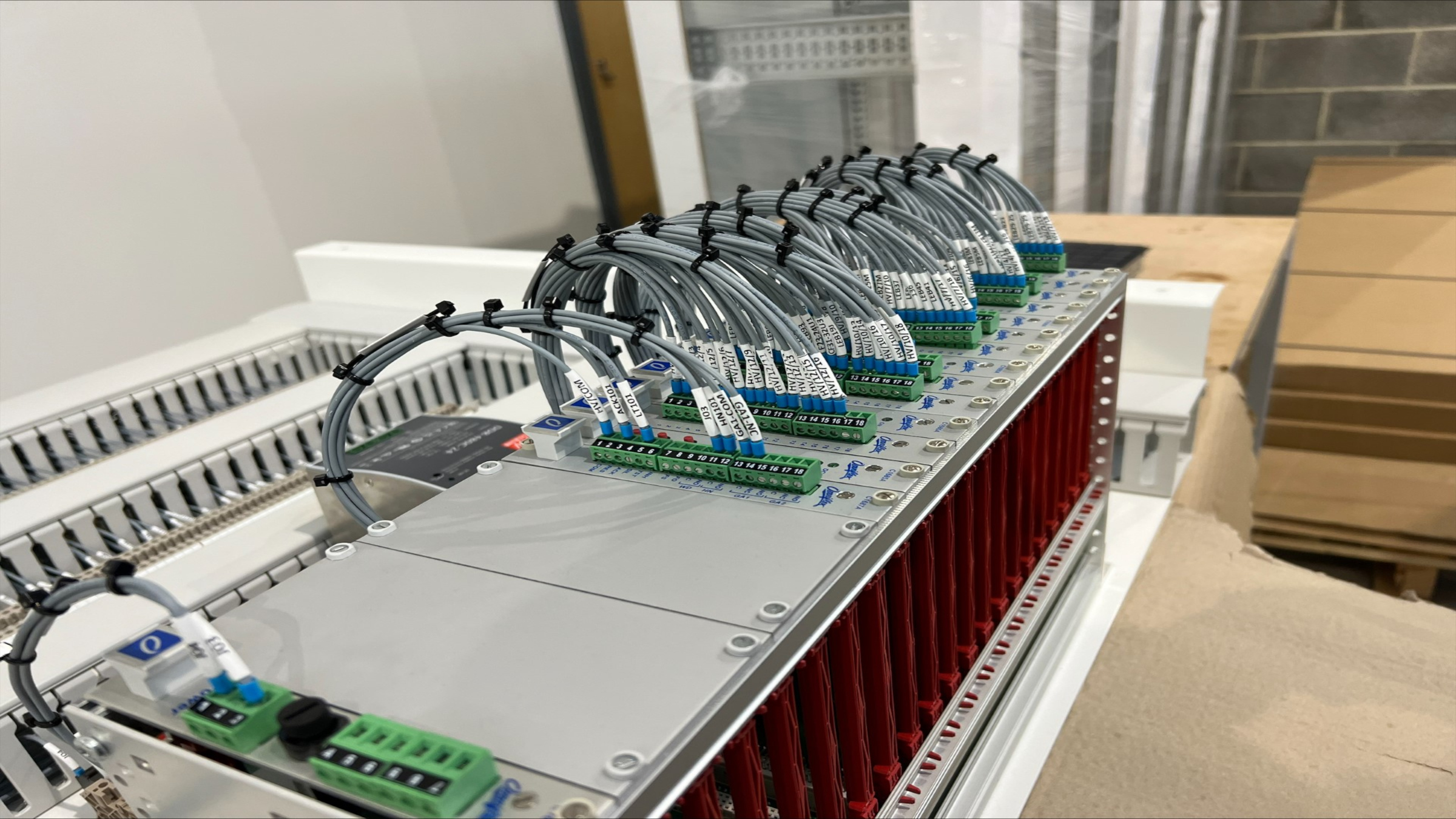
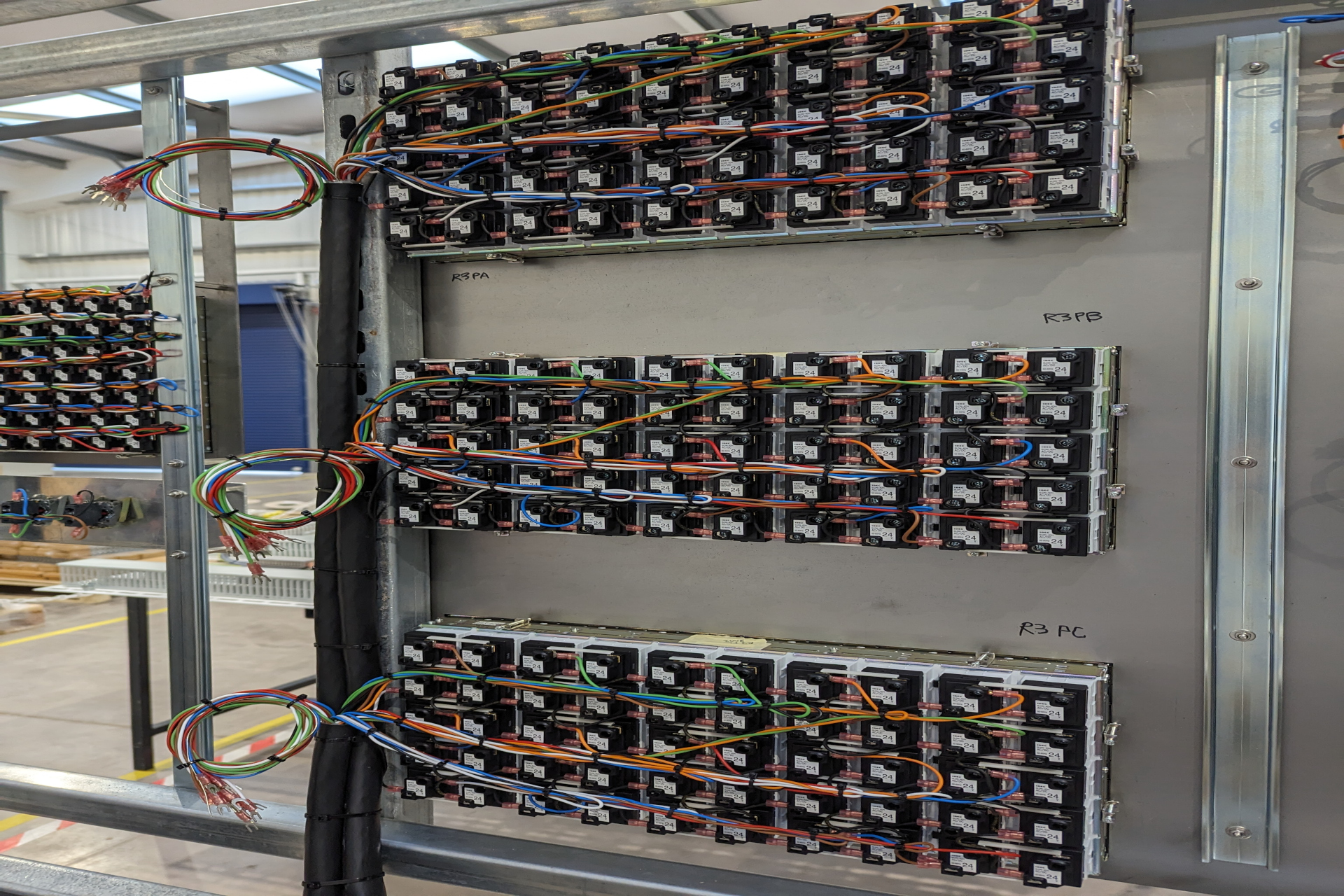
Control-room alarm systems have to stay fully reliable and compliant as they age, and replacing one means matching the existing system exactly so operators keep the familiarity they rely on, while meeting modern electrical, EMC and quality standards. AMS Nuclear delivers functionally equivalent replacements under QA Grade 2, integrating with existing cubicles, simulators and plant interfaces without disrupting a live nuclear environment.
At Hinkley Point B (EDF Energy), the Central Control Room (CCR) hardwired fire alarm system had reached the point where obsolescence and lifecycle risk required a structured replacement. AMS Nuclear designed, manufactured and qualified a modern, maintainable system that replicates the original behaviour, preserves operator confidence and aligns with the station’s technical standards, delivered through a controlled, hold-point-governed programme.
Operating Within a Safety-Critical Environment with Evolving Lifecycle Demands
Within the UK nuclear sector, control room alarm systems must remain fully reliable, traceable and compliant with both internal and regulatory requirements. At Hinkley Point B, the existing CCR hardwired alarm system had reached a stage where lifecycle considerations and component obsolescence required a structured and forward-looking replacement strategy.
The challenge was not simply to replace equipment, but to do so in a way that:
- Maintained full alignment with the station’s safety case and operational procedures.
- Preserved operator familiarity and usability.
- Ensured compatibility with existing cubicles, simulator systems and plant interfaces.
- Met stringent regulatory and engineering standards, including electrical, EMC and construction requirements.
All of this needed to be achieved without introducing operational disruption or unnecessary complexity within a live nuclear environment.
Engineering a Like-for-Like Yet Forward-Looking Solution
AMS Nuclear approached the project as an opportunity to combine proven system functionality with modern engineering practices. Rather than redesigning the operator experience, the focus was on delivering a functionally equivalent system with enhanced reliability and maintainability.
A structured, phased methodology underpinned delivery:
- Prototype development to confirm feasibility, validate interfaces and de-risk integration.
- Production engineering and qualification to ensure compliance with EDF technical specifications and environmental requirements.
- Manufacture and supply of replacement components designed for long-term operation and maintainability.
Particular attention was given to:
- Replicating existing system behaviour to maintain operator confidence.
- Ensuring mechanical and electrical compatibility with installed infrastructure.
- Embedding quality assurance throughout the design lifecycle in line with QA Grade 2 requirements.

“This was about delivering certainty, ensuring the new system performs exactly as expected, while giving the station confidence in its long-term reliability.”
Project Lead, AMS Nuclear
Delivering with Assurance: A Controlled and Compliant Implementation
Given the safety-critical nature of the CCR environment, delivery was governed by rigorous quality, testing and documentation processes.
AMS Nuclear worked closely with EDF technical stakeholders to ensure all stages of the programme were fully assured:
- Design development and review, aligned with company technical standards and subject to formal approval processes.
- Comprehensive testing, including prototype validation, qualification testing and production acceptance to demonstrate performance and compliance.
- Robust QA and documentation, including detailed quality plans, inspection points and lifetime record packages to ensure full traceability.
- Integration planning, supporting alignment with CCR simulator systems, installation strategies and commissioning requirements.
A structured hold-point regime ensured that each phase met defined acceptance criteria before progression, reinforcing confidence in both the process and the final system.
Creating a Repeatable Approach for Fleet-Wide Modernisation
Beyond the immediate delivery, the project established a scalable model for future alarm system upgrades across the nuclear fleet.
Key innovations and transferable practices included:
- Early-stage prototyping to reduce integration risk and validate design decisions.
- Close alignment with simulator systems, ensuring operational training evolves alongside plant modifications.
- Enhanced QA frameworks, strengthening compliance, documentation and audit readiness.
- Lifecycle-focused engineering, embedding maintainability, spares strategy and long-term support from the outset.
These approaches provide a strong foundation for similar control and alarm system modernisation programmes, enabling consistent, compliant and efficient delivery across sites.