


At Heysham 1 Power Station, AMS Nuclear delivered a fully integrated oxygen injection monitoring and protection system that enabled the safe removal of carbon deposits from fuel cladding, restoring heat transfer efficiency and supporting continued reactor performance. By combining high-integrity instrumentation, robust protection logic and a reusable system architecture, the solution enhanced operational safety, ensured regulatory compliance and provided a scalable approach for deployment across the AGR fleet. The system was engineered for repeat use over a 12-year lifecycle, maximising long-term value while maintaining strict adherence to nuclear safety standards.

Project Overview
Client: EDF Energy – Heysham 1
Type: Control & Instrumentation
Scope Of Supply: Design, Build, Test
Key Deliverables: A secondary valve shut off system (Last line of defence) substantiated to 10-2 Pfd
Addressing Fuel Cladding Performance Challenges in AGR Reactors
As part of EDF’s fleet-wide operational improvement strategy, Heysham 1 required a solution to mitigate the effects of carbon deposition on fuel pin cladding. Over time, these deposits had impaired heat transfer, contributing to elevated clad temperatures during operation.
This presented a technically sensitive challenge: enabling a controlled oxygen injection process to remove carbon deposits, while maintaining strict safety margins and avoiding the introduction of new risks within the primary coolant circuit. The solution needed to operate within tightly defined oxygen concentration limits, with robust protection systems to prevent unsafe conditions.
Engineering a Robust and Compliant Monitoring & Protection Solution
AMS Nuclear approached the project as a safety-critical engineering challenge, designing a system that not only enabled oxygen injection but actively safeguarded reactor conditions throughout the process.
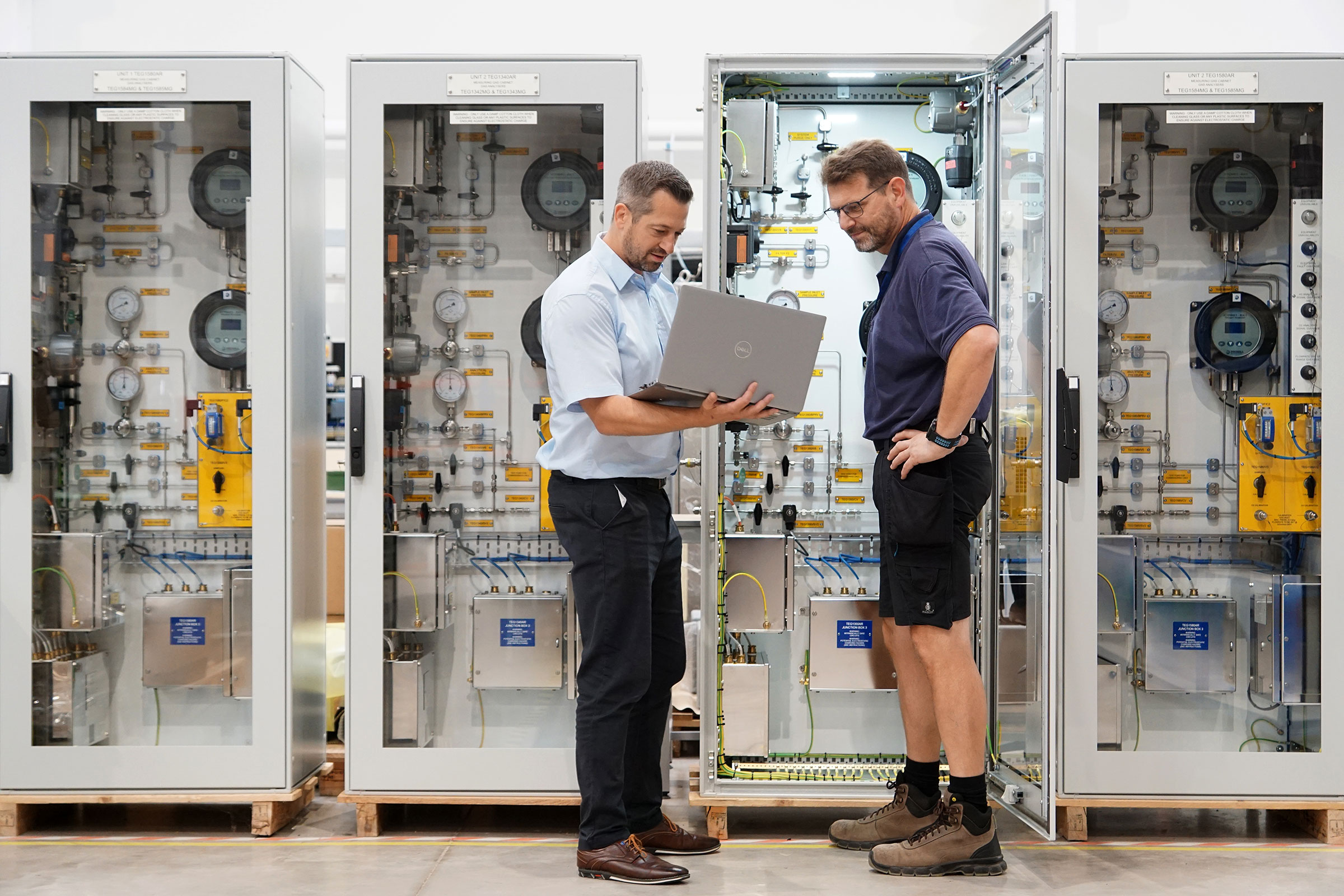
At the core of the solution was the Gas Circulator Maintenance Facility (GCMF) Valve Station Control Panel, supported by a distributed network of flow and pressure instrumentation across eight injection points. The system continuously monitored process conditions, ensuring balanced flow distribution and providing real-time visibility to operators.
To mitigate risk, AMS Nuclear implemented multiple layers of protection:
- Diverse flow measurement systems with voting logic to detect abnormal conditions.
- An independent oxygen-in-CO₂ analyser to directly measure gas composition.
- A failsafe shutdown valve, automatically isolating the system if thresholds were exceeded.
The design ensured that oxygen concentration remained within safe operating limits, with protection systems engineered to meet defined reliability targets and minimise the probability of failure on demand.
All elements were developed in accordance with EDF’s engineering standards and QA Grade 2 requirements, with full design substantiation and compliance with applicable British and international codes.

“Our focus was not just to deliver functionality, but to engineer confidence into the system, ensuring operators could rely on accurate data and automatic protection at every stage of the injection process.”
Lead Engineer, AMS Nuclear
Delivering Quality Through Controlled Design, Testing and Commissioning
The project was executed through a structured, quality-driven delivery model, ensuring full traceability and compliance at every stage.
AMS Nuclear undertook responsibility for:
- Detailed design and substantiation, including Basis of Design and safety justification.
- Procurement and manufacture of high-integrity instrumentation and control systems.
- Factory Acceptance Testing (FAT), simulating fault conditions to validate protection responses.
- On-site commissioning and testing, integrating the system within the reactor environment under controlled conditions.
Close collaboration with EDF teams ensured alignment with site constraints, including work within Radiation Controlled Areas and integration with existing plant systems. All activities were supported by comprehensive documentation, culminating in a fully auditable Lifetime Record Package (LTRP).
Creating a Reusable, Fleet-Wide Solution for Long-Term Value
This approach delivered significant strategic value:
- Supporting fleet-wide standardisation of oxygen injection processes.
- Reducing future project costs through equipment re-use.
- Providing a proven, regulatorily compliant solution for ongoing lifecycle management.
With a design life of up to 12 years and suitability for repeated campaigns, the system extends beyond a single intervention to become a long-term operational asset.
Advancing Best Practice in Reactor Lifecycle Management
The Heysham 1 project demonstrates how targeted engineering interventions can address ageing-related challenges while maintaining the highest standards of nuclear safety.
Key lessons and innovations include:
- The effectiveness of layered protection systems combining indirect and direct measurement techniques.
- The value of diverse instrumentation in reducing common-cause failure risks.
- The importance of designing for operability, maintainability, and reusability from the outset.
By delivering a solution that is both technically robust and operationally flexible, AMS Nuclear has contributed to advancing best practice in AGR fleet management and supporting the continued safe operation of the UK’s nuclear generation assets.